Savouries in Traditional British Afternoon Tea Explained
Why Savouries Start Afternoon Tea
Savouries are the first course in a traditional British afternoon tea. These small bites set a welcoming tone, bringing delicate, comforting, and celebratory flavors to the table before the sweeter courses arrive. They offer a satisfying start without making the meal feel heavy.
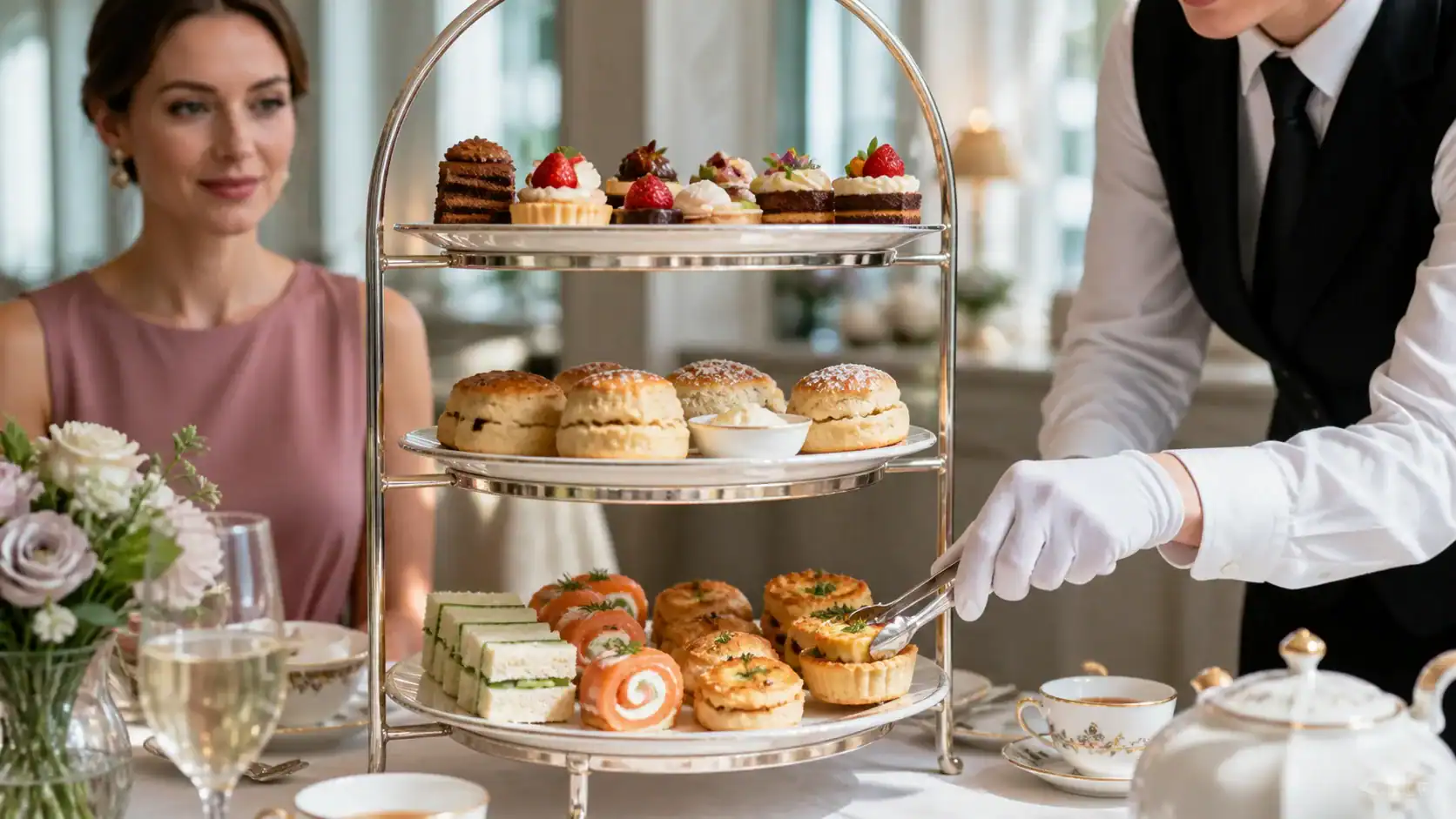
Afternoon tea is known for its lovely progression: savouries first, then warm scones, followed by pastries and sweets. Beginning with savory foods helps the palate notice the gentle flavors in every course. A fresh sandwich or warm baked bite makes the buttery scone and sweet finish feel even more special.
Where Savouries Belong in Tea Service
Savouries are lightly seasoned foods served before scones and desserts. They are usually neat, easy to pick up, and simple to enjoy while conversation flows. Their job is not to replace lunch or dinner. Instead, they create a graceful opening to a relaxed meal.
Traditional afternoon tea is sometimes confused with high tea, but the two are not quite the same. Afternoon tea is a refined service built around small finger foods, tea, scones, and pastries.The emphasis of afternoon tea is on Quality, and beautiful Presentation. High tea historically referred to a hearty, late evening laborer’s supper ier evening meal, a knife-and-fork sort of meal eaten together at the high dinner table. The emphasis of high tea was on Quantity, and was High tea often enjoyed by working households after a long day.
The order of service matters because each course has its own moment. Savouries wake up the palate, while tea refreshes it between bites. Then scones with cream and preserves or lemon curd bring warmth and richness. Finally, pastries offer a sweet ending that feels earned rather than overwhelming. Afternoon tea is meant for slowing down and enjoying not only the food, but also the others around the table. The beautiful, small finger food items, interspersed with the warmth of conversation and tea, invites connection, and feeds the soul as well as the body.
A classic tea service often follows this gentle rhythm:
- Fresh savouries to begin the meal
- Warm scones with traditional accompaniments
- Delicate pastries and sweets to finish
- Loose-leaf tea served throughout the experience
This sequence gives guests time to slow down and appreciate the details… and each other.
Classics Found on a Savoury Tier
Tea sandwiches are among the best-known savouries in British afternoon tea. Cucumber is a familiar favorite, valued for its cool, clean flavor, crisp texture, and ability to pair beautifully with so many butters and herbs. Other traditional fillings may include egg and cress, smoked salmon, chicken, or ham. The exact selection can change with the season, the setting, and the style of service.
What makes a tea sandwich feel traditional is often its restraint. Soft bread, fresh ingredients, tidy portions, and balanced fillings matter more than piling on extra flavors. A good savoury should be pleasing in a few bites and should not distract from the tea or the courses that follow.
Common qualities of classic savouries include:
- Soft bread with neatly trimmed edges
- Fresh fillings that are lightly seasoned
- Small portions that are easy to enjoy
- Flavors that pair well with tea
- Careful presentation without unnecessary fuss
The sandwich course connects guests to a long-standing British custom, yet it still leaves room for thoughtful seasonal touches. Chefs can bring in herbs, vegetables, or complementary ingredients while keeping the overall feeling calm, polished, and true to afternoon tea.
Seasonal Savouries for Autumn Tea
Autumn is a fitting time to appreciate the warmer side of savouries. As Albuquerque days begin to cool, rich herbs, roasted vegetables, and gentle spice can feel especially welcome. Seasonal menus may draw inspiration from those comforting flavors while keeping portions light enough for afternoon tea.
Along with classic sandwiches, some tea services may include warm savouries such as petite tarts, small pastries, or other baked bites. These additions bring a little contrast in texture. A crisp pastry shell or warm filling can sit beautifully beside a cool tea sandwich, as long as the course remains balanced.
Seasonal changes also make afternoon tea feel fresh across the year. The structure stays familiar, but the details shift. A returning guest may recognize the traditional order of tea service while finding new flavors on the savoury tier. That mix of comfort and surprise is part of what makes a seasonal menu so enjoyable.
How Savouries Balance the Full Experience
Savouries keep afternoon tea from becoming too sweet. Their fresh, salty, herbal, or lightly tangy notes provide contrast before the richness of scones and the sweetness of pastries. They create a pause that makes each following course easier to enjoy.
Tea plays an important role, too. Brisk black teas can feel especially refreshing with sandwiches and warm baked savouries. Fragrant loose-leaf blends may bring out gentle flavors in herbs, eggs, smoked fish, or vegetables. Taking small sips between bites helps the meal unfold at an unhurried pace.
At The St. James Tearoom, guests can reserve traditional British afternoon tea in an elegant Albuquerque parlor setting and experience this classic progression firsthand. Savouries are more than the first plate placed before guests. They provide the foundation for the balanced, thoughtful pleasure of the full afternoon tea service.
Savor A Timeless Afternoon Tea Experience
At St. James Tearoom, we invite you to slow down and enjoy a gracious meal filled with thoughtful details and classic flavors. Whether you are celebrating a special occasion or gathering with friends, our tea service offers a memorable escape from the everyday. reserve traditional British afternoon tea and let us welcome you to the table.